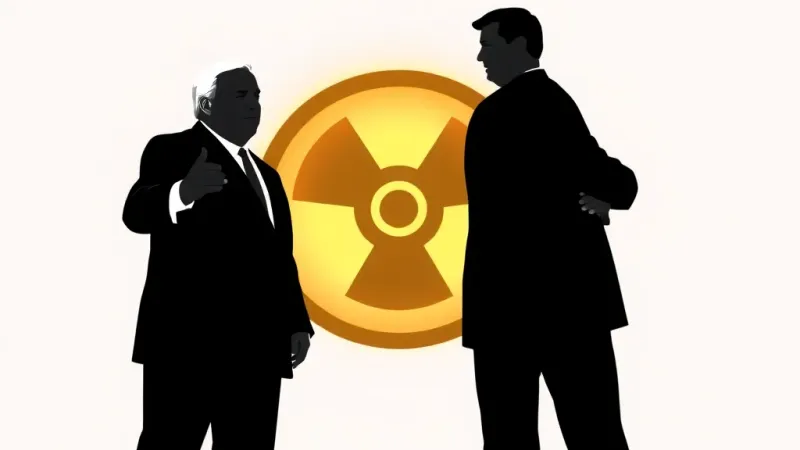
Former U.S. President Donald Trump has reportedly delivered a significant assurance to Israeli Prime Minister Benjamin Netanyahu, pledging an unwavering stance against any compromise on Iran's uranium enrichment program if he secures re-election. This private communication, widely disseminated across prominent Israeli media outlets including Channel 12 and Walla News over the weekend, suggests a potential pre-emptive alignment on a critical regional security issue, casting a long shadow over future diplomatic efforts concerning Tehran's nuclear ambitions.
For years, Iran's nuclear activities have remained a central and escalating concern for both Israel and Western powers. Tehran has steadily advanced its uranium enrichment capabilities, with the International Atomic Energy Agency (IAEA) regularly reporting on these advancements, which include enrichment to levels far beyond the thresholds stipulated in the 2015 Joint Comprehensive Plan of Action (JCPOA). These developments have intensified fears that Iran could be moving closer to developing nuclear weapons, a claim Iran consistently denies, maintaining its program is solely for peaceful purposes.
Trump’s previous administration famously withdrew from the JCPOA in 2018, citing its perceived inadequacies in fully curbing Iran's nuclear ambitions and its ballistic missile program. Prime Minister Netanyahu was a vocal supporter of this withdrawal, having long argued that the deal provided too many concessions to the Islamic Republic. The reported assurance from Trump would reinforce a familiar and preferred approach from Washington for Jerusalem, potentially contrasting with some allies' calls for renewed diplomacy and a return to the nuclear agreement.
For Israel, an uncompromising U.S. position on Iran’s nuclear program is paramount, viewing a nuclear-armed Iran as an existential threat. The timing of these reports, amid ongoing regional tensions and a complex geopolitical landscape, underscores the deep strategic calculations at play. "This reported pledge signals a clear intent to re-establish a policy of maximum pressure should there be a change in U.S. leadership," stated Dr. Lena Rostova, a geopolitical analyst at the Institute for Middle East Studies. "Such a definitive declaration, even in private, underscores the deep strategic convergence between Trump and Netanyahu on this specific threat perception."
While these reports remain unofficial communications and represent a speculative view of future policy, they offer crucial insight into the potential direction of U.S.-Israel relations and Iranian policy under a prospective second Trump administration. The Middle East remains a volatile region, and any perceived shift in U.S. resolve on Iran could have cascading effects on regional alliances, proxy conflicts, and global energy markets, setting the stage for renewed international debate and tension surrounding Tehran's nuclear future.