
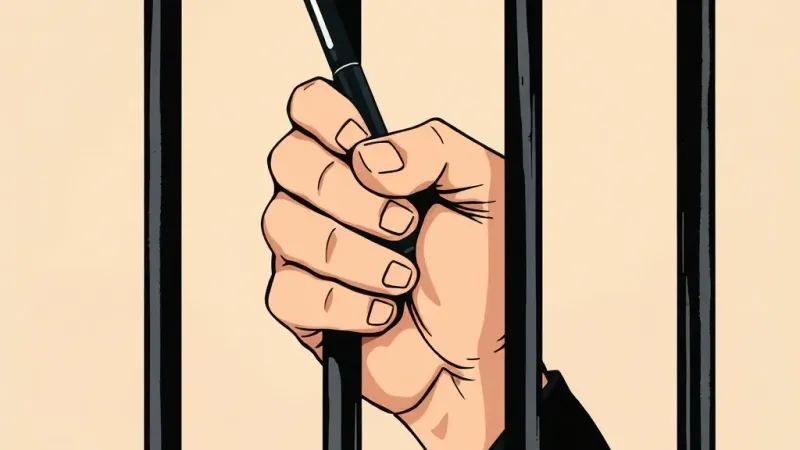
TUNIS – The detention of a leading Tunisian journalist this past week has sent a potent signal through the nation's media landscape, underscoring growing concerns about press freedom and the government's tightening grip on public discourse. Amal Belhaj, a seasoned investigative reporter known for her work on governmental accountability, was apprehended at her home in Tunis on Tuesday by National Guard agents, accused of disseminating 'false news' and 'slandering public officials' under the contentious Decree-Law 54.
Belhaj’s arrest follows a surge in legal actions against journalists, lawyers, and political opponents since President Kais Saied consolidated power in July 2021. Human rights organizations and press watchdogs have repeatedly criticized Decree-Law 54, enacted in September 2022, for its ambiguous wording and draconian penalties, which include up to five years in prison for spreading 'false news.' Critics argue it is systematically employed to stifle dissent and muzzle independent reporting.
The specific allegations against Belhaj reportedly stem from a series of articles she published investigating alleged corruption within a state-owned enterprise responsible for public utilities. Her reporting, meticulously sourced and widely shared, had raised uncomfortable questions for several high-ranking officials. The detention, carried out without an immediate public explanation of specific charges beyond the general decree, triggered immediate condemnation from local and international advocacy groups.
Dr. Karim Zughlami, head of the Tunisian Center for Media Rights, articulated the profound apprehension gripping the profession. “This latest action against Ms. Belhaj is not merely an isolated incident; it is a calculated escalation designed to instill fear among journalists,” Dr. Zughlami stated. “The chilling effect is palpable, forcing many to self-censor or abandon critical investigations altogether. Tunisia’s democratic gains, painstakingly built over a decade, are rapidly being dismantled, and media independence is squarely in the crosshairs.”
While the government has maintained that arrests are conducted within the bounds of national law and target individuals suspected of illegal activities rather than their profession, these assurances have done little to quell mounting anxieties. Amina Rached, a spokesperson for the Ministry of Communications, reiterated the government’s stance in a recent statement: “Tunisia upholds the rule of law, and no individual, regardless of their profession, is exempt from accountability for actions that undermine national security or public order. These measures are not aimed at silencing legitimate journalism, but at combating misinformation.”
Yet, the consistent targeting of critical voices paints a different picture for many observers. Belhaj’s case now stands as a critical litmus test for Tunisia's commitment to free expression, with her fate potentially dictating the trajectory of press freedom in a nation once seen as a beacon of post-Arab Spring democratic aspiration. The international community watches closely, urging transparency and adherence to fundamental human rights principles.


