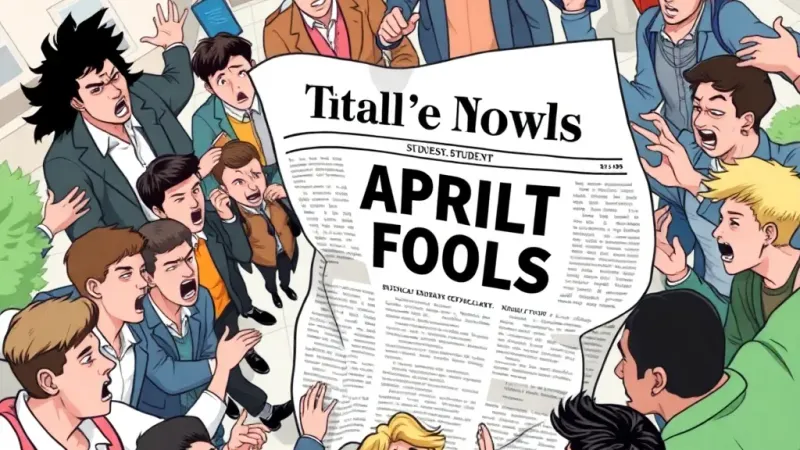
The University of North Carolina at Chapel Hill campus has been engulfed in a storm of controversy following the publication of an April Fools' Day satirical edition by its independent student newspaper, The Daily Tar Heel. The special insert, distributed on April 1st, intended as a humorous take on campus life and current events, instead ignited widespread outrage among students, faculty, and alumni, prompting robust discussions about journalistic responsibility and the boundaries of humor in a university setting.
The contentious content, reportedly touching on sensitive campus issues and mockingly portraying various student groups and administrative decisions, quickly circulated across social media platforms. Specific segments of the edition, which included fabricated headlines and fictionalized articles, were deemed by many to be deeply offensive and insensitive. For instance, one article, purportedly lampooning student activism efforts, was singled out for trivializing serious concerns. Another piece, appearing to target specific campus organizations, was criticized for fostering division rather than unity within the diverse student body.
The backlash was swift and vocal. Sarah Chen, a senior majoring in political science, expressed her dismay, stating, "While satire can be a powerful tool, this crossed a line. It wasn't just poking fun; it felt dismissive of genuine student struggles and disrespectful to entire communities on campus." Similar sentiments were echoed by Professor Mark Reynolds from the School of Journalism, who remarked, "Student media holds a unique position, balancing independent thought with the responsibility to the community it serves. This incident certainly challenges that balance." Numerous online petitions calling for an apology and a review of the editorial process have garnered hundreds of signatures within days.
In response to the escalating criticism, The Daily Tar Heel's editorial board issued a statement acknowledging the "unintended consequences" of their publication. They emphasized the newspaper's long-standing tradition of April Fools' editions and reiterated their commitment to independent journalism and free expression. While expressing regret that some readers were offended, they stopped short of a full apology for the content itself, framing the incident as a learning opportunity regarding the nuanced interpretations of satire. This stance has, for some, only fueled further debate regarding the newspaper's accountability to its readership.
The incident has sparked a broader campus-wide dialogue about the role of humor in journalism, the line between satire and insensitivity, and the responsibilities of student publications. University administrators have acknowledged the distress among students and are encouraging open discussions through various campus forums. As the academic year draws to a close, the controversy serves as a stark reminder of the potent impact of student media and the continuous challenge of navigating artistic freedom alongside community expectations in a vibrant, diverse university environment.