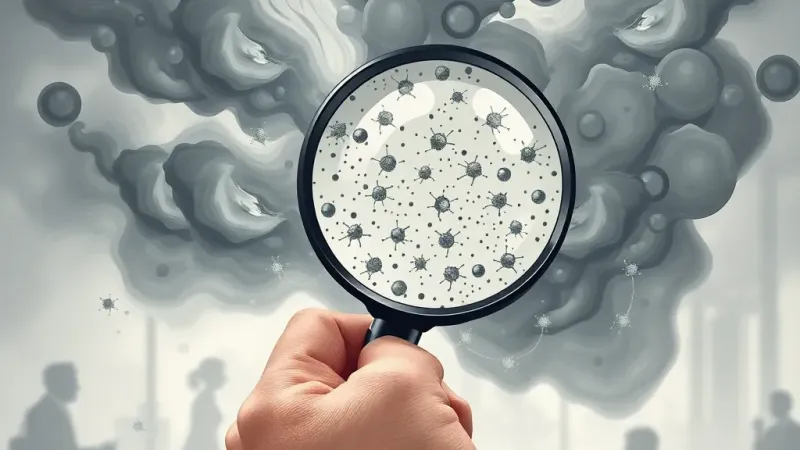
The Earth Journalism Network (EJN) has unveiled a new comprehensive guide aimed at significantly bolstering the capacity of journalists worldwide to report effectively on the multifaceted crisis of air pollution. Titled "A Journalist's Guide to Reporting on Air Pollution," this critical resource arrives at a time when atmospheric contamination continues to pose one of the gravest environmental and public health threats globally.
Air pollution is not merely an environmental concern; it is a silent killer, contributing to an estimated 7 million premature deaths annually, according to the World Health Organization. Its pervasive impact stretches across continents, affecting respiratory and cardiovascular health, cognitive development, and even the global climate. Yet, reporting on this complex issue often presents formidable challenges for journalists, ranging from deciphering intricate scientific data to navigating opaque policy landscapes and identifying localized sources of pollution.
The EJN guide meticulously addresses these hurdles, providing reporters with a robust toolkit designed to translate complex scientific jargon into accessible narratives. It delves into methodologies for interpreting air quality data, identifying key pollutants like particulate matter (PM2.5) and nitrogen dioxide, and understanding their specific health implications. Furthermore, the resource offers practical advice on pinpointing local emission sources, ranging from industrial factories and vehicular traffic to agricultural practices and household energy use.
Crucially, the guide emphasizes the importance of humanizing the story. It encourages journalists to move beyond abstract data by connecting pollution to real people and communities, showcasing personal struggles and public health crises unfolding in affected regions. It also outlines strategies for investigating policy failures, holding polluters accountable, and exploring potential solutions, thus moving beyond mere problem identification to constructive journalism.
Mr. Julian Vance, an independent media analyst specializing in environmental reporting trends, remarked on the guide's timely release. "Journalists often grapple with the sheer volume of scientific data and the intricate web of policy, making comprehensive reporting a formidable task," Vance stated. "This guide distills that complexity into actionable insights, empowering reporters to ask the right questions and present information with the clarity and authority that public health demands."
Beyond data interpretation and narrative construction, the guide also dedicates sections to journalist safety when working in hazardous environments, an often-overlooked aspect of environmental reporting. It underscores the ethical responsibilities of media professionals in ensuring accurate representation and avoiding misinformation, particularly concerning a topic with such profound public health implications.
The EJN's initiative is expected to foster a new generation of informed and impactful environmental reporting, enabling news outlets to provide their audiences with more precise, actionable information. By equipping journalists with these essential tools, the network aims to elevate public awareness, drive policy reforms, and ultimately contribute to healthier, cleaner air for communities worldwide. The guide represents a significant step forward in the ongoing global effort to confront and mitigate the pervasive threat of air pollution through diligent, informed journalism.