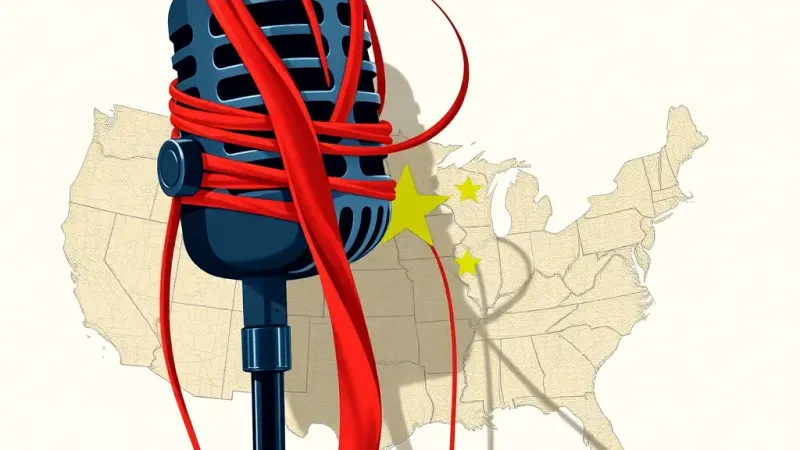
Washington D.C. – A bombshell indictment has sent shockwaves through the American media landscape, as federal authorities announced charges against a prominent U.S. journalist for allegedly acting as an unregistered agent of the Chinese government. The charges, unveiled by the Department of Justice, mark a significant escalation in efforts to counter foreign influence operations and have ignited a fierce debate about the integrity of the press and national security vulnerabilities. The journalist, whose name has not been officially released in connection with the specific foreign agency charges in this initial announcement, is accused of engaging in activities on behalf of Beijing without proper registration under the Foreign Agents Registration Act (FARA), a statute designed to ensure transparency in foreign lobbying and advocacy within the United States.
The indictment alleges a sustained campaign by the journalist to disseminate specific narratives favorable to the Chinese Communist Party and to gather sensitive information, operating discreetly within U.S. media circles. According to federal prosecutors, the activities spanned several years, involving clandestine meetings and financial transactions orchestrated to obscure the true nature of the relationship. This development underscores growing concerns within intelligence agencies regarding sophisticated attempts by foreign adversaries to manipulate public discourse and perception through seemingly legitimate channels. The Department of Justice emphasized that the charges are not an assault on journalistic freedom but rather a firm stand against covert foreign interference.
The gravity of the allegations cannot be overstated, particularly given the escalating geopolitical tensions between Washington and Beijing. “This isn't merely a lapse in judgment; it strikes at the very heart of trust in our informational ecosystem,” stated Dr. Evelyn Reed, a leading national security analyst at the Sentinel Policy Group. “When individuals within our own media are allegedly co-opted, it creates a dangerous vulnerability that foreign powers can exploit to shape policy and public opinion to their advantage.” The case threatens to further erode public confidence in journalism at a time when misinformation and disinformation campaigns are already rampant.
Investigators reportedly utilized extensive electronic surveillance and witness testimony to build their case, meticulously detailing the alleged payments and directives received from Chinese officials. The journalist's alleged role included ghostwriting articles, arranging favorable media appearances, and providing insights into U.S. political dynamics – all while concealing the underlying foreign directive. The prosecution will likely argue that these actions crossed the line from independent reporting to clandestine advocacy, circumventing the legal requirements for transparency.
Media ethics experts are grappling with the implications. “This case is a sobering reminder that the line between reporting and propaganda can be perilously thin, and that journalists hold an immense responsibility,” commented Marcus Thorne, executive director of the Center for Journalistic Integrity. “If these allegations prove true, it represents a profound betrayal of the public trust and the foundational principles of an independent press. It also raises questions about the vetting processes within news organizations and the pressures journalists might face.”
The accused journalist is expected to enter a plea in the coming weeks, with the legal proceedings anticipated to be complex and highly scrutinized. A conviction under FARA carries significant penalties, including imprisonment and substantial fines. The federal government has indicated that the investigation is ongoing, suggesting potential further indictments as authorities work to uncover the full extent of the alleged network. The outcome of this landmark case will undoubtedly set a precedent for how the U.S. government addresses foreign influence operations targeting its media institutions moving forward, marking a critical juncture for both national security and journalistic ethics.