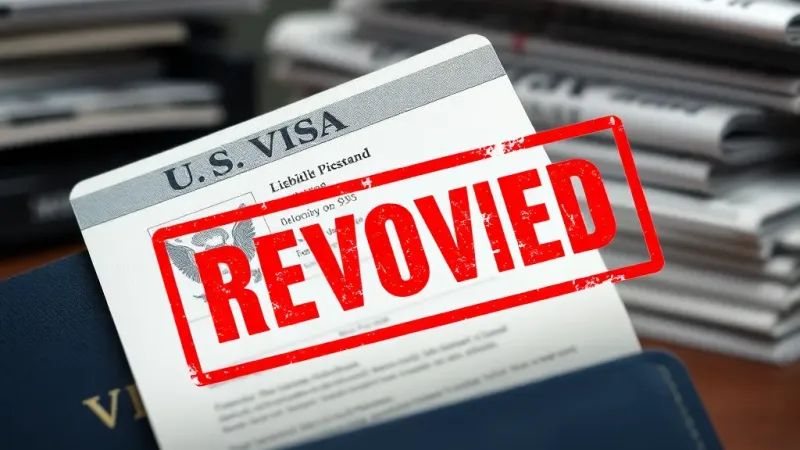
SAN JOSÉ, Costa Rica — The United States has revoked the visas of two leading directors of a prominent Costa Rican newspaper, a move that has ignited a firestorm of criticism from international press freedom organizations and sparked concerns of political retaliation.
The Committee to Protect Journalists (CPJ) first reported the revocations, which affect Mr. Ricardo Morales, editor-in-chief, and Ms. Elena Vargas, managing director, of 'El Observador Nacional,' a daily known for its investigative journalism and critical stance on governmental affairs. The specific reasons for the U.S. State Department's decision remain officially undisclosed, fueling speculation that the action is a direct response to 'El Observador Nacional's' recent coverage, which has delved into sensitive issues including alleged corruption and human rights abuses within the region.
Sources close to the affected individuals confirmed that both Morales and Vargas received notifications from the U.S. Embassy in San José earlier this week, informing them of the immediate cancellation of their non-immigrant visas. Neither individual has been provided a detailed explanation for the revocation, a procedural opacity that CPJ and other groups have denounced as deeply troubling and potentially retaliatory. The lack of transparency runs contrary to established diplomatic norms and raises alarms about the chilling effect such actions could have on independent media.
"This unprecedented action by the U.S. government against respected journalists is alarming and sets a dangerous precedent for press freedom throughout Latin America," stated Dr. Sofia Ramirez, a spokesperson for the Global Media Watchdog organization. "When journalists face professional consequences, including travel restrictions, for their reporting, it undermines the very foundation of democratic accountability. We urge the U.S. to reverse these decisions and provide a full, transparent explanation."
While U.S. officials have maintained a policy of not commenting on individual visa cases due to privacy regulations, a representative from the U.S. Embassy in Costa Rica, who preferred to remain unnamed, asserted that all visa decisions are made in accordance with U.S. law and policy, and are based on a thorough review of facts, without elaborating further on the current situation. However, the timing of the revocations, following a series of in-depth reports by 'El Observador Nacional' criticizing certain regional policies and international development projects, has left many observers convinced of a direct link.
The incident has sent ripples through the Costa Rican media landscape, with local journalists expressing solidarity and concern for the future of independent reporting. "This isn't just about two journalists; it's about the message it sends to all of us," commented local reporter Marco Delgado. "It suggests that holding power accountable can come with severe personal costs, even from external powers that claim to champion democracy." The international community now watches closely, anticipating further developments and potentially broader implications for diplomatic relations and press freedoms in the region.