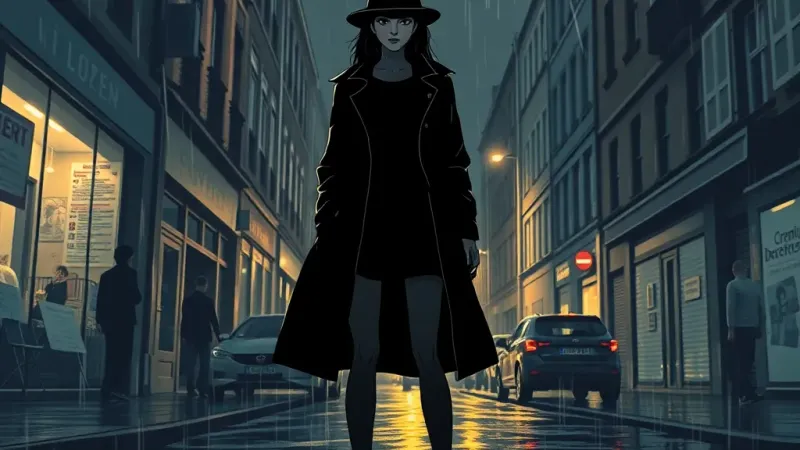
Cannes, France – Valeska Grisebach's long-anticipated feature, ‘The Dreamed Adventure,’ has premiered at the 2026 Cannes Film Festival, immediately establishing itself as a profound cinematic statement that boldly defies the established conventions of the gangster drama. The German filmmaker’s 164-minute epic plunges audiences into a meticulously crafted world where the slow burn replaces rapid-fire action, and existential dread supersedes gratuitous violence. Its unhurried pace and unconventional narrative have not only captivated critics but have also sparked vigorous debate among festival attendees, positioning it as one of the festival’s most talked-about entries.
Central to this audacious vision is the compelling performance by Yana Radeva, who portrays an archeologist-turned-gumshoe, a character as enigmatic as the plot itself. Radeva's Dr. Elara Vance, initially immersed in ancient history, finds herself unexpectedly embroiled in a shadowy underworld, forced to apply her investigative rigor to contemporary criminal networks. "Her transition from deciphering ancient ruins to untangling modern-day conspiracies is handled with such subtle grace," remarked film scholar Dr. Alistair Finch, attending the premiere. "It redefines what a protagonist in this genre can be, eschewing the typical hardened detective for someone more intellectual and introspective."
Grisebach’s directorial hand is evident in every lingering shot and understated dialogue, transforming the usual frenetic energy of a gangster film into a meditative exploration of crime and consequence. Instead of a linear progression, the narrative unfolds through fragmented clues and psychological introspection, challenging viewers to piece together the mosaic alongside Vance. The film’s setting, rumored to be a fictionalized port city on the Baltic Sea, adds another layer of atmospheric depth, its desolate landscapes mirroring the moral decay at the heart of the criminal enterprise Vance unearths. The criminal element itself is depicted not with romanticism, but with stark, almost mundane brutality that underscores the film's gritty realism.
This deliberate subversion of genre expectations is precisely what has garnered widespread critical acclaim. Reviewers have lauded Grisebach for her courage in stretching the boundaries of storytelling, particularly within a genre often constrained by formula. "Grisebach has dared to ask what happens when you strip away the glamour and the speed from a gangster narrative, leaving only the raw, human element," wrote Ms. Clara Bellwether, a prominent film critic for Global Cinephile. "The result is less a drama about gang warfare and more a philosophical inquiry into the nature of power, corruption, and the slow, inexorable decay they inflict."
The film's sheer length, clocking in at 164 minutes, is integral to its immersive quality. Grisebach employs extended sequences and meticulous character development, allowing the audience to fully inhabit the protagonist’s experience of discovery and peril. This commitment to an unhurried pace ensures that every revelation, every tense confrontation, carries significant weight, eschewing cheap thrills for profound emotional and intellectual engagement. The production design, spearheaded by veteran artisan Gregor Schmidt, is particularly noteworthy, bringing a lived-in authenticity to both the archeological digs and the clandestine meeting spots.
‘The Dreamed Adventure’ stands as a testament to independent cinema’s capacity for innovation. It’s a work that demands patience but richly rewards it, offering a fresh, cerebral take on a genre frequently reliant on spectacle. As Cannes continues, many anticipate that Grisebach’s latest will not only inspire future filmmakers but also redefine audience expectations for what a "gangster drama" can truly achieve, solidifying its place as a groundbreaking piece of contemporary European cinema.