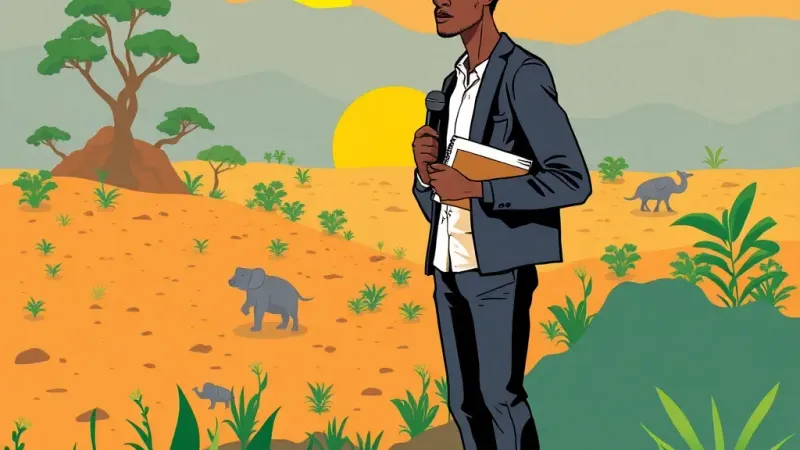
ABUJA, NIGERIA – In a significant endeavor to bolster critical climate reporting across West Africa, the Centre for Journalism Innovation and Development (CJID) has officially launched its Call for Applications for the 2026 Storytelling Fellowship for Environmental Journalists. This pivotal initiative seeks to empower a new generation of reporters with specialized skills and resources to investigate and articulate the urgent ecological challenges confronting one of the world's most vulnerable regions.
West Africa stands at the epicentre of the global climate crisis, grappling with pervasive issues from rampant deforestation and desertification in the Sahel to devastating coastal erosion and plastic pollution. These environmental pressures not only threaten biodiversity but also exacerbate socio-economic instability, food insecurity, and displacement. The fellowship acknowledges journalism's crucial role in translating complex scientific realities into compelling human stories, capable of galvanizing public awareness and policy action.
The CJID fellowship offers a rigorous program designed to elevate participants' storytelling capabilities. Successful applicants will undergo intensive training in investigative techniques, data analysis, ethical reporting on climate science, and multimedia production. Mentorship from seasoned environmental journalists and scientists forms a cornerstone, providing invaluable guidance as fellows embark on independent reporting projects. The ultimate goal is to foster a network of expert communicators producing impactful narratives resonating locally and internationally.
'The ecological challenges facing West Africa are profoundly human, affecting livelihoods, cultures, and futures,' stated Dr. Amara Nwabueze, Director of Strategic Programs at CJID, in a recent briefing. 'This fellowship is more than just training; it’s an investment in truth-telling, empowering journalists to uncover and convey stories that demand attention and drive meaningful change. We seek individuals with a deep commitment to environmental justice and an insatiable curiosity.'
The 2026 fellowship specifically aims to nurture narratives highlighting innovative local solutions, exposing systemic environmental degradation, and scrutinizing policy effectiveness. It provides financial stipends, access to research grants, and travel opportunities for fieldwork, enabling journalists to report directly from affected communities. Aspiring fellows are encouraged to demonstrate a proven journalistic track record, a strong proposal for an environmental story, and a clear vision for their role in environmental advocacy through reporting. The application window is now open, inviting dedicated West African journalists to seize this unparalleled opportunity to shape the discourse around one of the most defining issues of our time.