
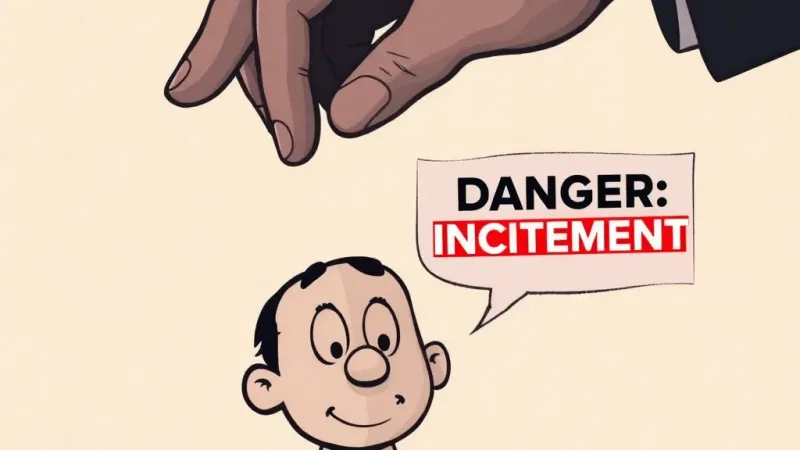
The Trump administration has drawn significant scrutiny after senior officials reportedly equated robust political criticism and satirical content with explicit calls for violence, sparking a contentious national debate over the boundaries of free speech and acceptable political discourse. This unprecedented stance, articulated through various official channels, has raised alarm among constitutional experts and civil liberties advocates who contend it threatens foundational democratic principles.
The comparison surfaced during a period of heightened political tensions, with administration figures suggesting that certain forms of artistic expression and pointed political commentary contribute to an environment conducive to hostility. While specific instances cited by the administration were not widely publicized, the overarching message conveyed a strong disapproval of content perceived as overly critical or mockingly subversive, placing it dangerously close to incitement. This move is seen by many as an attempt to delegitimize dissent and control the narrative surrounding governmental actions.
Critics quickly condemned the administration's position, warning of its potential to chill free expression. "To conflate satire, a time-honored tradition of political commentary and critique, with incitement to violence is not only a mischaracterization but a dangerous precedent," stated Dr. Elias Vance, a professor of constitutional law at Commonwealth University. "Satire often serves as a crucial pressure valve in a democratic society, allowing for pointed, often uncomfortable, examinations of power without resorting to physical harm. This comparison erodes the very bedrock of our First Amendment protections."
However, some political strategists and administration allies argue the move is a necessary response to an increasingly vitriolic public sphere. "There’s a clear difference between reasoned debate and rhetoric that, intentionally or not, fuels animosity," commented Ms. Brenda Albright, a political commentator known for her conservative viewpoints. "When the line between sharp criticism and outright dehumanization becomes blurred, it’s understandable that authorities might seek to highlight the potential ramifications. The administration is simply urging a greater sense of responsibility in public communication."
This dispute underscores a fundamental tension in modern political discourse: where does protected speech end and dangerous rhetoric begin? For artists, journalists, and everyday citizens, the administration's pronouncements inject a new layer of uncertainty into their creative and communicative endeavors. The historical role of satire, from ancient Greek comedies to modern political cartoons, has consistently been to challenge authority and provoke thought, often through exaggerated or absurd depictions. The current administration's stance suggests a re-evaluation of this historical tolerance, prompting concerns about a chilling effect on creators who might now self-censor to avoid official scrutiny or accusation.
As the debate continues to unfold, legal scholars and civil liberties organizations remain vigilant, asserting that a clear distinction between protected speech and actual incitement must be rigorously maintained. The implications of blurring these lines, they argue, extend far beyond individual artistic expression, potentially impacting the health and vibrancy of democratic deliberation itself. The episode serves as a stark reminder of the continuous effort required to safeguard constitutional freedoms in a politically charged environment.


