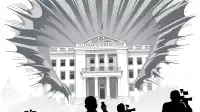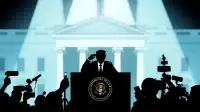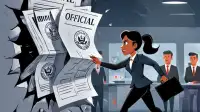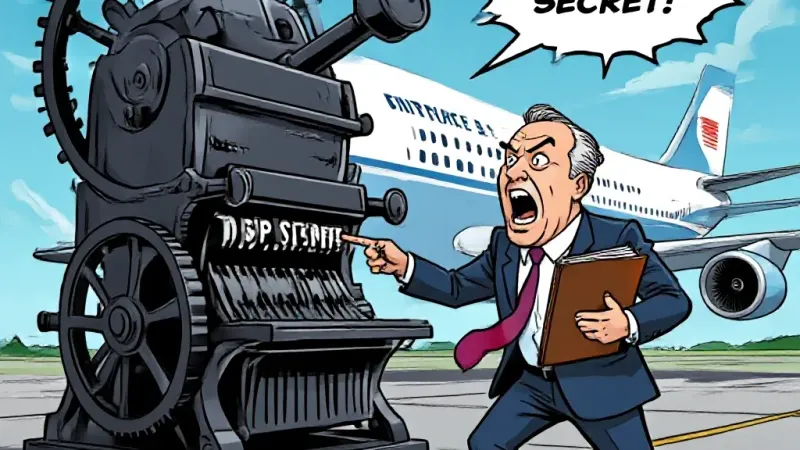
WASHINGTON D.C. — The White House today confirmed that four New York Times journalists are facing federal grand jury subpoenas, not for *leaking* classified information, but for the far graver offense of *reporting* on it after someone else leaked it. Administration officials stated the true threat to Air Force One's security comes not from potential vulnerabilities themselves, but from the public's awareness of those vulnerabilities, which apparently conjures them into existence.
"Our primary concern is the integrity of the information space," explained Chad Piffle, Senior Deputy Assistant to the Associate Director of Strategic Perception Management. "When reporters print details about, say, a glaring security loophole that a rogue janitor could exploit with a rusty paperclip, it gives bad actors ideas. Before, it was just a theoretical security gap. Now, thanks to the New York Times, it's practically a how-to guide for paperclip enthusiasts worldwide." Piffle clarified that had the Times simply refrained from publishing, the loophole would have remained a purely intellectual exercise, invisible and thus harmless.
The subpoenas demand the journalists reveal their sources, along with any other information that might help the administration identify who initially believed the public should know about their elected officials’ travel safety. This unprecedented action, experts say, marks a significant shift in how national security is defined. No longer about protecting physical assets from foreign adversaries, it’s now primarily about shielding the fragile image of government competence from the harsh reality of public scrutiny. "We're moving beyond 'don't tell,' to 'don't even think about what we're not telling you,'" noted Dr. Loretta Vance, head of the Institute for Pre-Emptive Ignorance Studies. "Soon, simply possessing the *capacity* to read news about the government could be considered a security risk. The goal isn't just to silence, it’s to make sure no one ever hears the silence."
To further protect the nation from inconvenient truths, sources indicate the administration is exploring measures to classify all ink, paper, and digital screens, effectively making all reporting on government affairs a breach of national security. Future press briefings are expected to feature officials communicating solely through interpretive dance or pre-approved emoji sequences to minimize the risk of "information leakage" via coherent sentences.
The administration expects the journalists will cooperate fully, or face the ultimate penalty: being forced to read only official White House press releases for the rest of their lives.