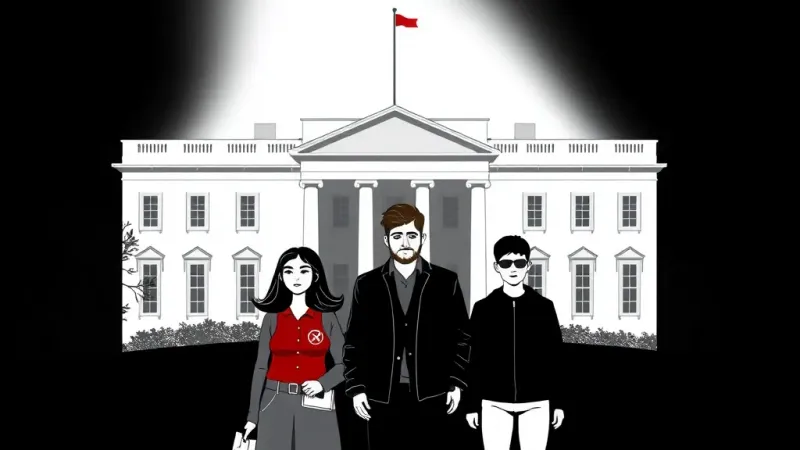
Washington D.C. – The Trump administration has significantly broadened its definition of who constitutes a 'terrorist' domestically, according to recent reports, now reportedly encompassing anti-fascist activists, drug traffickers, and transgender individuals. This expansive reclassification, spearheaded by controversial 'terrorism czar' Sebastian Gorka, has triggered a wave of concern among human rights advocates and national security analysts.
ProPublica’s Hannah Allam brought these revelations to light following an inquiry into Gorka's role within the administration. Gorka, whose expertise in domestic security has been widely questioned by former colleagues and policy professionals, has been central to shaping the White House's approach to identifying internal threats. Critics point to a thin resume and a perceived lack of practical experience in counter-terrorism operations, suggesting his elevation to such a sensitive position has led to a problematic reorientation of national security priorities.
The implications of classifying such disparate groups under the 'terrorist' umbrella are profound. For anti-fascist groups, often involved in protests against far-right demonstrations, this redefinition could lead to increased surveillance and harsher legal penalties. Similarly, drug dealers, typically prosecuted under criminal statutes, could now face federal terrorism charges, a move some legal experts consider a dramatic overreach. The inclusion of transgender individuals, specifically, has been met with incredulity and outrage, with advocacy groups decrying it as discriminatory and lacking any evidentiary basis in actual terrorist activity.
Dr. Evelyn Reed, a senior fellow at the Institute for Civil Liberties, stated, "To conflate protest movements, criminal enterprises, and an entire identity group with terrorism is not only a misallocation of vital security resources but also a dangerous erosion of fundamental rights. It risks criminalizing dissent and targeting vulnerable communities under the guise of national security."
Community organizer Mr. Samuel Vance echoed these concerns, remarking, "This isn't about protecting the nation; it's about chilling free speech and stigmatizing marginalized populations. How can we trust a government that labels citizens based on their identity or political views as threats to national security?"
This shift reflects an ongoing internal debate within the administration regarding the focus of domestic counter-terrorism efforts, moving beyond traditionally understood extremist organizations to a much wider array of societal groups. The controversy underscores deep divisions over what truly constitutes a national security threat and how federal agencies should respond, raising serious questions about the future of civil liberties in the United States.