
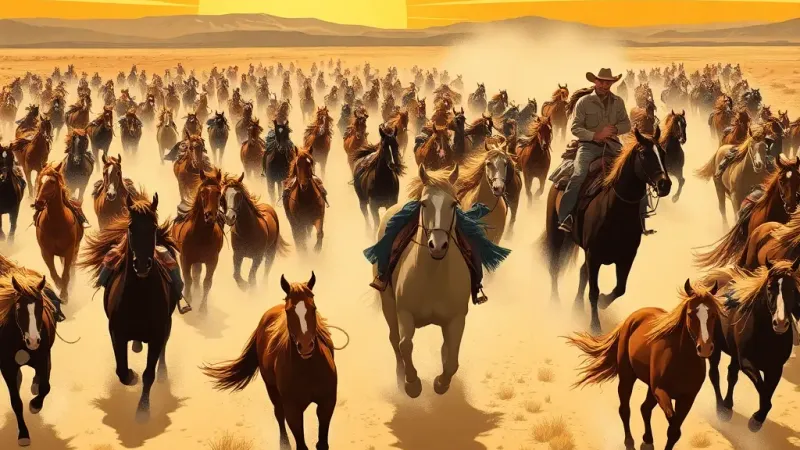
The rumble of hooves and the shouts of cowboys echoed through the small Wyoming town of Leiter earlier this week, as the historic Eaton family completed a significant leg of their annual horse drive. This centuries-old tradition, a powerful testament to the American West's enduring spirit, saw hundreds of horses expertly herded through the community on their journey from winter to summer grazing pastures. The spectacle, drawing both residents and visitors, served as a vibrant reminder of the region's deep-rooted ranching heritage.
Approximately 600 head of horses, ranging from seasoned ranch mounts to spirited young colts, thundered across the landscape, guided by a team of skilled Eaton family wranglers and invited guests. The drive, covering dozens of miles, necessitates careful planning and execution, ensuring the welfare of the animals and the safety of all involved. Riders, some mounted on horses that had participated in previous drives, demonstrated exceptional horsemanship as they navigated the expansive terrain leading to the picturesque stopover point near Leiter.
For generations, the Eatons have maintained this arduous but essential practice, originating from their pioneering ranching operations that date back to the late 19th century. The horse drive is more than just an logistical necessity; it is a living history lesson, embodying the resilience, hard work, and unique bond between humans and horses that defined the frontier. It offers a tangible link to a bygone era, allowing modern observers to glimpse the authentic rhythms of cowboy life that once shaped the American West.
The stop in Leiter has become an anticipated annual event, transforming the quiet town into a temporary hub of activity and nostalgia. "It's like the Wild West rides right through our backyard every year," remarked Elara Vance, a longtime Leiter resident who watched the drive from her porch. "You can almost hear the echoes of the old cowboys. It makes you proud to live in Wyoming." Local businesses often see a minor uptick in activity, as spectators and support crews pass through.
The commitment of families like the Eatons ensures the continuation of these vital traditions, bridging the past and present. "This drive is a commitment to our heritage, but also to the health and vitality of our herd," stated Jedediah Stone, a veteran rancher who has participated in the Eaton drive for years. "It's hard work, but seeing these magnificent animals move across the land, guided by tradition, is truly something special. It reminds us of what's important." As urban sprawl encroaches on ranching lands elsewhere, Wyoming remains a bastion for such practices, preserving a cultural legacy for future generations.


