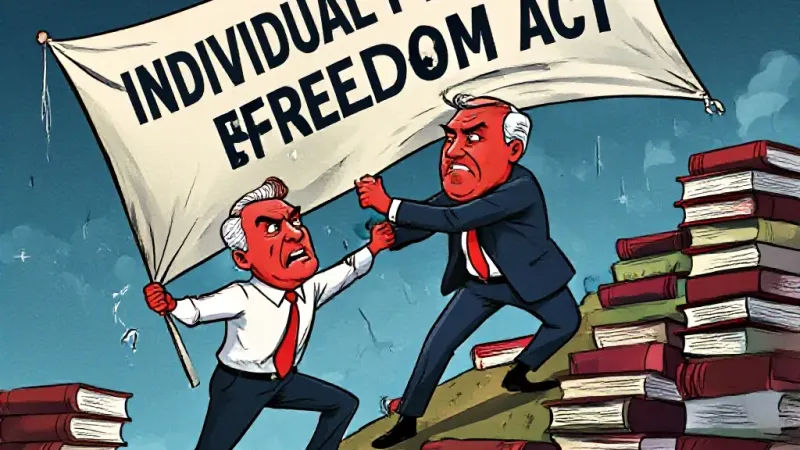
The state of Florida's persistent efforts to dictate the parameters of corporate and academic dialogue have, once again, been met with a decisive judicial rejection. The Eleventh Circuit Court of Appeals recently upheld an injunction against the Individual Freedom Act, formerly known as the “Stop WOKE Act,” deeming its provisions a violation of the First Amendment. This marks the third distinct occasion federal courts have found the law unconstitutional, reinforcing a consistent judicial stance against state-mandated speech restrictions.
Originally signed into law in 2022, the Individual Freedom Act aimed to prohibit certain discussions in workplaces and public educational institutions regarding race, gender, and national origin. Specifically, it sought to prevent training or instruction that suggested individuals could be held responsible for actions committed by members of their same race or sex, or that suggested any person is privileged or oppressed based on their race, color, sex, or national origin. For employers, non-compliance carried the risk of significant financial penalties and legal action.
The appeals court affirmed a lower court's preliminary injunction, stating plainly that the Act “bars a substantial amount of protected speech.” It highlighted the state's overreach in attempting to compel employers and educators to adopt its preferred ideological viewpoint, while simultaneously suppressing viewpoints it deemed objectionable. The ruling acknowledged the inherent tension between the state's purported interest in preventing discrimination and its chosen method of achieving this through content-based speech restrictions.
This latest ruling stemmed from a lawsuit filed by Honeyfund.com, Inc., and others, challenging the Act's restrictions on corporate diversity, equity, and inclusion (DEI) training. Another federal court previously enjoined the Act's application in higher education settings, finding similar First Amendment infringements. The consistent invalidation across different contexts underscores a fundamental disconnect between legislative intent and constitutional limits.
For businesses and educational institutions in Florida, the repeated judicial intervention offers a measure of clarity amidst ongoing legislative attempts to reshape internal communications. While the state is likely to pursue further appeals, the current legal landscape heavily favors the protection of speech, even speech that may be deemed uncomfortable or critical by some. The saga illustrates a persistent willingness to challenge settled constitutional principles in pursuit of a particular ideological outcome, consistently to no avail. The cost, of course, is borne by taxpayers and the stability of the legal framework.