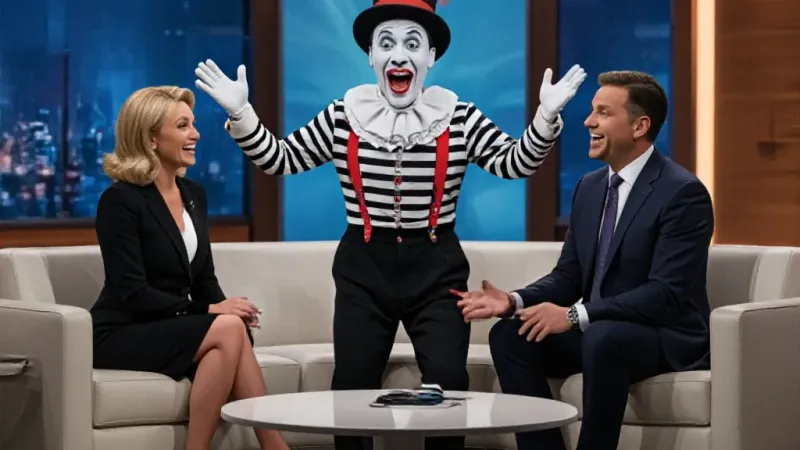
The finely tuned machinery of network morning television, typically a synchronized ballet of promotional segments and lifestyle updates, experienced a brief but notable disruption last week. On NBC’s “Today” program, actor and comedian Marcello Hernández, alongside co-star Kevin Hart, was ostensibly present to discuss their latest venture, the Peacock streaming series "72 Hours." What transpired, however, temporarily rerouted the broadcast’s carefully charted course.
During the interview, Hernández, an alumnus of NBC's own "Saturday Night Live," pivoted from standard promotional banter to an impromptu, and remarkably accurate, impression of his co-star, Kevin Hart. The performance, delivered with the characteristic high-energy cadence and physical comedy of the subject, immediately recalibrated the atmosphere of the usually structured set. Hosts Hoda Kotb and Jenna Bush Hager, accustomed to steering conversations along predetermined routes, visibly succumbed to the unscripted moment, dissolving into laughter.
More notably, Kevin Hart himself, the direct object of the impression, not only endorsed the performance but offered a public assessment of Hernández’s broader comedic utility. Hart stated, with a candor rarely seen in cross-promotional appearances, that "Saturday Night Live" "underutilizes" Hernández’s talents. This unscripted declaration, a direct critique of a major network institution's talent management strategies, landed with a precision that belied the lighthearted context.
This incident offers a brief but telling glimpse into the friction points within the contemporary media landscape. Morning shows, integral to the promotional ecosystem, are meticulously crafted environments. Every guest, every segment, and often every word, is calibrated for maximum brand synergy or audience engagement. Hernández’s impression, by contrast, represented an organic eruption of talent that momentarily superseded the corporate mandate.
The “derailment,” as some outlets framed it, underscores a persistent challenge for platforms and content creators: balancing the necessity of manufactured promotion with the unpredictable power of authentic performance. In an attention economy saturated with pre-packaged content, a moment of unbridled, unscripted humor can cut through with remarkable efficacy. That it originated from within the promotional framework, and even garnered a public critique of a major network’s talent deployment, only amplifies its signal in the noise. For a fleeting minute, the business of information yielded to a simple, effective joke.