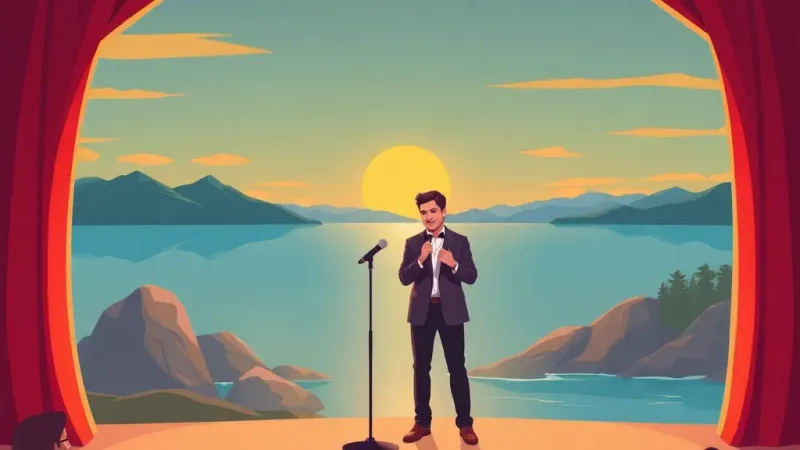
British Columbia's tranquil rural islands, long celebrated for their picturesque landscapes and laid-back lifestyles, are experiencing an unexpected cultural renaissance: they have become vibrant hotbeds of live stand-up comedy. What began as scattered open mic nights in local pubs has evolved into a thriving circuit, attracting seasoned comedians and drawing hundreds of attendees to sold-out shows in community halls and intimate venues across the Gulf Islands and parts of Vancouver Island.
The phenomenon defies conventional wisdom, which typically associates stand-up comedy with bustling urban centres. Yet, these tight-knit island communities, often requiring ferry travel for both performers and audiences, have cultivated a unique and remarkably enthusiastic appetite for laughter. Organizers point to a convergence of factors: a strong sense of community fostering local events, residents' hunger for diverse entertainment options beyond traditional offerings, and a growing number of comedians seeking novel venues and engaged audiences away from the competitive city circuits.
Performances often take place in unconventional settings—from refurbished barns to small-town legion halls—lending an intimate charm rarely found in urban comedy clubs. “There’s a raw energy here you don’t find downtown,” observed Marcus Thorne, a touring comedian who frequently performs on the islands. “Audiences are incredibly present, genuinely excited, and they appreciate the effort it takes to bring live entertainment to their doorstep. You can feel the connection.” Thorne noted that the unique backdrop often inspires new material, adding a distinct flavour to the island shows.
This burgeoning comedy scene is not merely a fleeting trend; it represents a significant cultural shift. It enriches local social calendars, provides economic boosts to small businesses through increased foot traffic and tourism, and challenges long-held stereotypes about rural areas lacking sophisticated cultural offerings. “These islands are proving that artistic innovation isn’t exclusive to metropolitan hubs,” stated Eleanor Vance, a cultural sociologist specializing in rural development. “The demand for high-quality entertainment is universal, and these communities have risen to meet it with incredible ingenuity and passion.”
Local residents, accustomed to the peace and quiet, have embraced the new wave of entertainment with open arms. Brenda Carmichael, a long-time resident of Salt Spring Island, reflected, “It’s fantastic. We used to have to go to the city for this kind of show. Now, world-class comedians are playing just down the road. It’s created a wonderful buzz and brought us all closer together, sharing a good laugh.” The continued growth of these island comedy circuits suggests that the appeal of a good joke, delivered against a backdrop of natural beauty, is a powerful and enduring force.