A biting new theatrical production, "Ministry of Questionable Questions," has opened to considerable buzz, offering a scathing yet humorous critique of India's increasingly theatrical and often performative press conference culture. Staged at the prestigious Triveni Kala Sangam's Shriram Centre, the play, conceived by a collective of seasoned satirists and emerging talents, meticulously dissects the intricate dance between politicians, bureaucrats, and the media, exposing the underlying absurdities and manufactured narratives that frequently overshadow substantive discourse. Its premiere on October 27th drew a capacity audience, eager to witness a mirror held up to one of the most visible yet least examined facets of public communication.
The play's central premise revolves around a fictional government ministry, aptly named the 'Ministry of Questionable Questions,' where press briefings are less about transparency and more about obfuscation, grandstanding, and the strategic deployment of non-answers. Audiences are treated to a parade of archetypal characters: the perpetually evasive minister, the sycophantic journalists posing softball questions, and the occasional dissenting voice quickly sidelined. Through sharp dialogue, exaggerated scenarios, and clever staging, the production highlights issues ranging from the media's struggle for access and accountability to the calculated deflection tactics employed by those in power. Director Ms. Priya Sharma stated in a post-show interaction, "Our aim wasn't just to make people laugh, but to prompt a moment of reflection on what passes for public discourse today. We're observing a carefully choreographed ballet, not a genuine exchange of information."
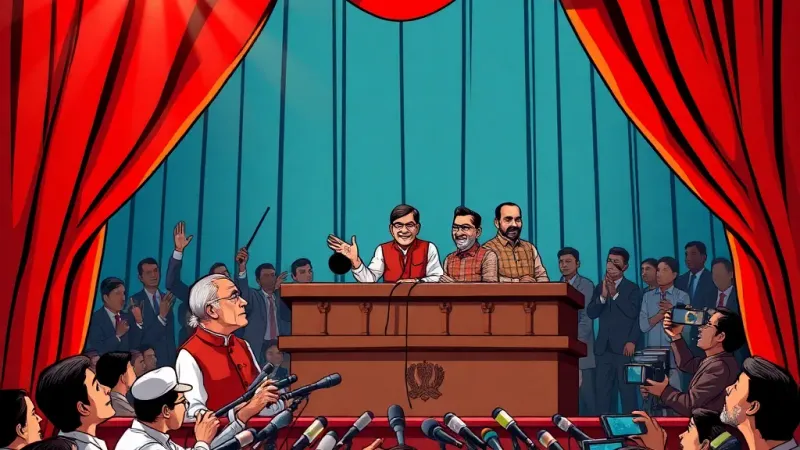
One particularly memorable scene depicts a minister deftly dodging inquiries about a major infrastructure project's delays by launching into an impassioned, yet entirely irrelevant, monologue about national heritage sites. The journalists, initially persistent, gradually succumb to the spectacle, their follow-up questions becoming increasingly tangential. The set design, featuring an imposing podium flanked by strategically placed party banners and a backdrop of blurred, flashing cameras, perfectly encapsulates the often-sterile and controlled environment of real-life pressers. The performance also cleverly incorporates pre-recorded sound bites of generic political rhetoric, further blurring the lines between satire and reality. "It felt like watching a live feed of yesterday's news, but with the volume turned up on the absurdity," commented Mr. Rajat Kapoor, a veteran journalist in attendance.
While primarily comedic, the play doesn't shy away from the serious implications of a compromised information ecosystem. Critics have lauded its courage in tackling a sensitive subject. Dr. Anjana Reddy, a media studies professor at Delhi University, remarked, "The 'Ministry of Questionable Questions' isn't just entertainment; it's a vital cultural commentary on the challenges of journalistic integrity and public accountability in an era dominated by soundbites and spin. It underscores the urgency for both the press and the public to demand more substantive engagement." The production’s insightful lampooning resonates deeply with many who observe the daily charade of public pronouncements, where genuine inquiry often gets lost amidst pre-scripted statements and curated interactions.
As the play continues its run, it serves as a potent reminder of the power of satire to provoke thought and stimulate conversation about crucial societal issues. Its success suggests a widespread hunger for honest, albeit humorous, examinations of the political and media landscape. "Ministry of Questionable Questions" stands as a testament to the enduring role of art in holding power accountable, even if it's through the prism of laughter and exaggerated truth. The collective hopes the play encourages audiences to question not just the answers they receive, but the very questions being asked—or avoided—in the public sphere.