
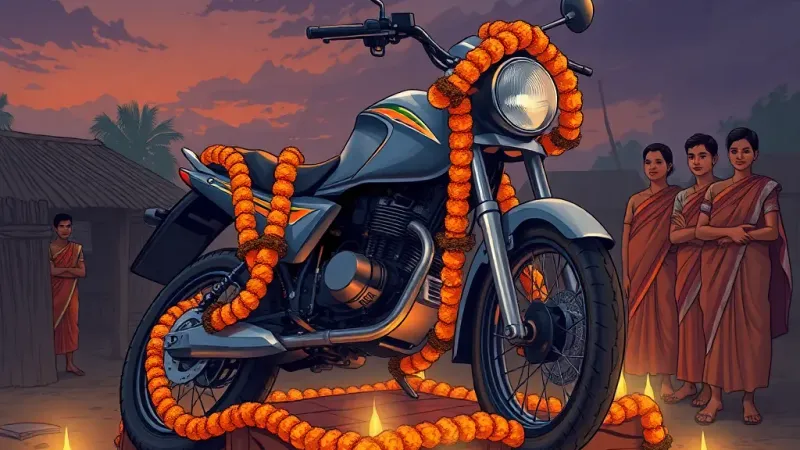
In a bold cinematic endeavor challenging the very fabric of belief, the independent feature film 'Dug Dug' is garnering significant attention for its darkly comedic and acutely satirical portrayal of blind faith. Directed by Ritwik Pareek, the film intricately weaves a narrative around the unlikely transformation of a crashed motorcycle into an object of veneration in a remote Indian village, thereby dissecting the complexities of human credulity and the commercialization of spirituality. The film, which premiered to critical acclaim, offers a poignant reflection on how belief systems can emerge from the most mundane and tragic circumstances.
The central premise of 'Dug Dug' unfolds following a fatal motorcycle accident involving a local resident, ostensibly a character named Thakur. His prized vehicle, a 'Dug Dug' branded motorcycle, becomes the focal point of an unforeseen spiritual movement. Initially, villagers merely observe the wrecked bike, but a series of seemingly inexplicable events or coincidences attributed to the crash site gradually elevates the defunct machine to sacred status. Soon, a makeshift shrine is erected, evolving into a full-fledged temple dedicated to the "Dug Dug Baba," attracting pilgrims and donations, transforming the local economy and social dynamics. This rapid ascent from roadside wreckage to divine relic highlights the human propensity to seek meaning and miracles in the extraordinary, even if fabricated.
Pareek's direction meticulously crafts a narrative that is both absurd and deeply resonant, inviting audiences to question the origins and perpetuation of blind faith. The film doesn't shy away from showcasing the opportunism that often accompanies spiritual fervor, depicting how local entrepreneurs capitalize on the newfound deity, selling merchandise, constructing larger temples, and even orchestrating "miracles." "The brilliance of 'Dug Dug' lies in its ability to present a preposterous scenario with such a deadpan realism that viewers are forced to confront uncomfortable truths about their own societies," stated Dr. Anjali Sharma, a renowned cultural critic from the Institute of Contemporary Arts, in a recent interview. The narrative cleverly illustrates how collective belief, regardless of its foundation, can become an unshakeable force, shaping destinies and economies.
Shot on location in Rajasthan, the film leverages the vivid backdrop of rural India to amplify its thematic concerns. The stark landscapes and authentic performances by its ensemble cast lend an unvarnished authenticity to the unfolding absurdity. Viewers are presented with a microcosm of society where spiritual longing, economic desperation, and communal conformity intertwine to create a unique cultural phenomenon. The film's critical reception underscores its timely relevance, provoking discussions on contemporary issues of superstition, religious exploitation, and the delicate balance between reverence and reality. 'Dug Dug' stands as a compelling testament to independent cinema's power to hold a mirror to society's quirks and convictions.