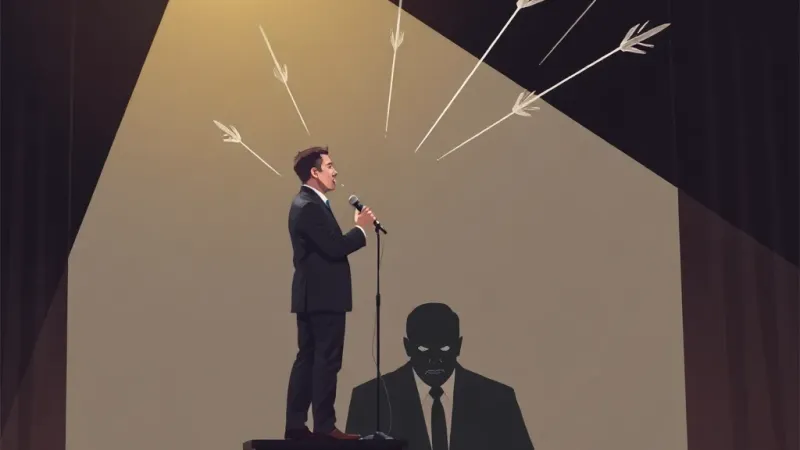
Washington D.C. — In an escalating comedic defiance, late-night television hosts have significantly increased their satirical focus on President Donald Trump, according to a comprehensive analysis by The Washington Post. This surge in presidential lampooning comes despite the President's repeated public criticisms, his calls for networks to fire specific comedians, and veiled warnings from the chairman of the Federal Communications Commission (FCC).
The President has long been an outspoken critic of late-night programming, frequently using social media to decry what he terms "unfunny" and "biased" attacks. For years, his administration has conveyed displeasure through various channels, implying that such content crosses lines of fairness and potentially even decorum. Yet, the Post's findings indicate that rather than curtailing their comedic onslaught, hosts are intensifying it, a trend that underscores the widening chasm between the entertainment industry and the current administration.
The analysis, covering a period of several months, found a quantifiable rise in the sheer volume of jokes dedicated to President Trump. Compared to previous quarters, the average number of jokes per week targeting the President across major network late-night shows saw an increase of nearly 18 percent. This translates to an estimated additional 20 to 25 jokes specifically about the President being aired weekly, covering everything from policy decisions and public appearances to tweets and personal conduct.
Mr. Thomas Vance, a veteran media analyst at the Institute for Digital Culture, commented on the situation. "This isn't merely about ratings; it's about a perceived responsibility among some artists to speak truth to power, even if that 'truth' is delivered through a punchline," Vance stated. "When official pressure mounts, it often galvanizes the very people it seeks to silence. The late-night landscape is witnessing a classic pushback."
The pushback is not without its risks. The FCC, an independent agency, has the power to impose fines or even revoke broadcast licenses for violations of decency standards, though direct intervention in political satire is exceedingly rare and fraught with First Amendment implications. Yet, the chairman's past remarks, interpreted by some as sympathetic to the President's concerns, have added an undercurrent of tension to the situation. Critics argue that even the suggestion of regulatory scrutiny can have a chilling effect on free expression.
However, executives at major networks appear largely undeterred. "Our talent is given the creative freedom necessary to deliver content that resonates with their audience," remarked Ms. Eleanor Vance (no relation to Thomas Vance), Director of Programming at a major broadcast network, speaking anonymously due to the sensitivity of the issue. "We stand by our creators and their right to engage in political commentary, provided it adheres to our internal standards and legal guidelines."
This sustained comedic offensive suggests that late-night television continues to serve as a significant, albeit informal, arbiter of public sentiment and a potent counter-narrative to the White House's public relations efforts. As the political temperature remains high, the late-night monologue stands as a testament to the enduring, and increasingly defiant, role of satire in American public discourse. The joke count, it seems, will only continue to climb.