Late-night host Jimmy Kimmel, following a recent wave of criticism for an on-air remark, deployed a potent satirical counter-offensive, redirecting the comedic crosshairs squarely onto former President Donald Trump. The move, coming amidst a heated political climate and intense scrutiny of public figures, marks an escalation in the comedian's long-standing critical commentary against the former administration.
The initial controversy stemmed from Kimmel's monologue earlier in the week, where he made a comment during a segment discussing military benefits. His specific quip, delivered during a discussion on proposed changes to survivor benefits for military families, involved a hypothetical scenario about a "wealthy widow's lavish spending habits." Critics swiftly denounced it as insensitive and disrespectful to those who have lost loved ones in service. Social media platforms and conservative news outlets amplified the backlash, with many demanding an apology and even his removal from his prominent late-night slot. "It was a truly thoughtless remark that showed a profound lack of empathy," stated Marcus Thorne, founder of 'Citizens for Respectful Discourse'. "Public figures, especially those with such wide reach, have a responsibility to choose their words carefully."
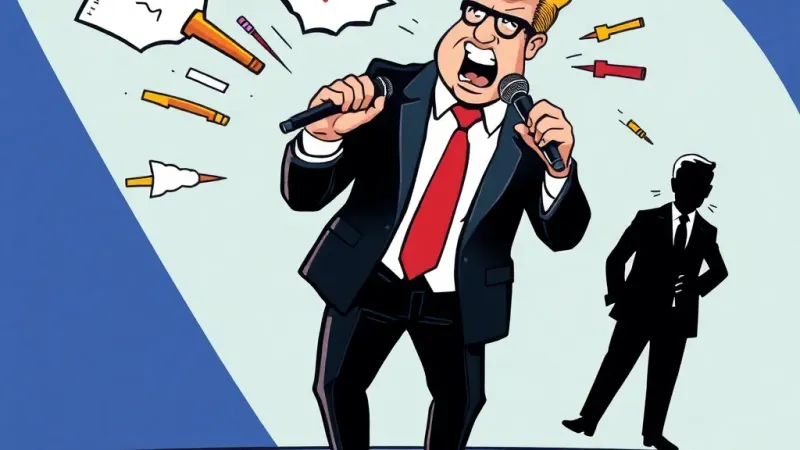
However, instead of a direct apology solely addressing the specific "widow remark," Kimmel opted for a characteristic late-night pivot. During Wednesday night's broadcast, he acknowledged the public outcry but quickly framed it within a broader context of selective outrage. "Some people think I should be fired," Kimmel began. "But if we're going to start firing people for inappropriate comments, maybe we should start with someone who has a much longer track record." He then launched into a biting critique of former President Trump's past public statements, particularly those concerning Gold Star families and deceased Senator John McCain. Kimmel presented a montage of Trump's controversial remarks, culminating in a pointed observation about the former president's own history of perceived insensitivity. "Perhaps," Kimmel concluded, "the outrage machine could find a more deserving target for its collective ire."
The response to Kimmel's strategic redirection was immediate and bifurcated. Supporters lauded his tenacity and willingness to challenge what they perceived as hypocritical criticism. "Kimmel expertly turned the tables," remarked Dr. Vivian Holloway, a professor of media studies. "It highlights the selective nature of outrage in our current media landscape." Conversely, critics maintained that Kimmel had sidestepped responsibility for his original gaffe, using the former president as a shield. "He completely dodged the issue," asserted Clara Jenkins, a prominent conservative commentator. "Instead of owning his mistake, he chose to deflect by attacking someone else."
This latest exchange underscores the increasingly fraught relationship between comedy, politics, and public accountability. Late-night hosts, traditionally granted a wide berth for satire, are now operating under intensified scrutiny, where every joke can become a flashpoint for cultural and political warfare. Kimmel’s maneuver, while controversial, serves as a potent reminder that in the current media environment, every public utterance carries the potential for both widespread condemnation and strategic counter-argument, often blurring the lines between apology and political attack.