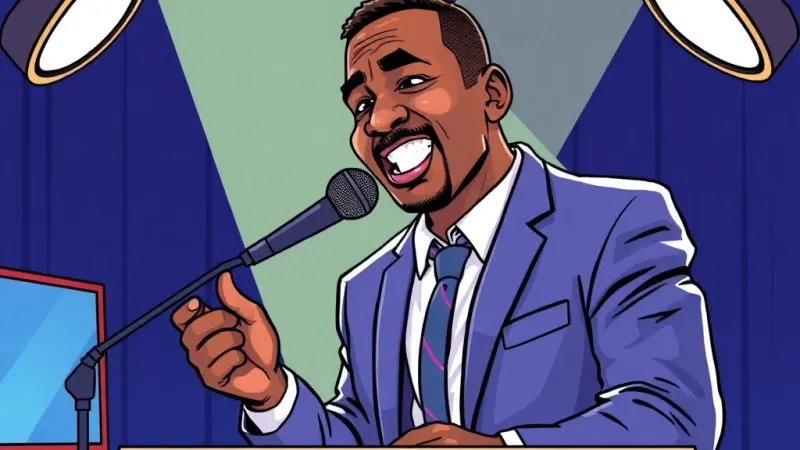
The venerable "Saturday Night Live" segment, Weekend Update, once again served as a cultural lightning rod this past weekend, featuring comedian Kam Patterson in a segment that unequivocally targeted NBA star Klay Thompson. Patterson's incisive commentary, delivered with a deadpan intensity, dissected recent circulating rumors involving Thompson and artist Megan Thee Stallion, leaving no room for subtlety and drawing widespread attention across social media platforms.
Patterson, making his mark on the iconic news desk alongside co-anchor Michael Che, wasted no time in launching into a series of pointed jabs. Addressing the pervasive whispers of Thompson's alleged infidelity, Patterson delivered the now-viral punchline that resonated deeply with viewers: "He's not Clay, he's Dirt." The remark, a play on the Golden State Warriors shooting guard's distinctive name, immediately set the tone for a segment rich in unvarnished humor. He further pressed Che, rhetorically questioning, "Wait a minute, there's a WNBA for men? What you even call that, the MNBA?" The observation, while seemingly tangential, brilliantly highlighted the perceived disconnect between Thompson's off-court conduct and his esteemed athletic status, amplifying the comedic critique.
The catalyst for Patterson's segment stems from the widespread and unverified rumors that began circulating weeks prior, implicating Thompson in a cheating scandal involving Megan Thee Stallion. These allegations, which rapidly gained traction across various digital spheres, created a fertile ground for public discourse and, inevitably, comedic interpretation. SNL, known for its timely and often audacious takes on trending topics, seized this narrative, positioning Patterson as the blunt instrument of public sentiment. The segment underscored how quickly personal rumors can transcend celebrity gossip columns to become fodder for mainstream satire.
"Saturday Night Live" has historically functioned as a crucial barometer of the cultural zeitgeist, and its Weekend Update segment, in particular, has a storied tradition of leveraging current events for comedic effect. By inviting new comedic voices like Patterson to address such high-profile, albeit unconfirmed, narratives, the show reinforces its role as a mirror reflecting, and often lampooning, the prevailing societal chatter. The segment not only provided laughter but also initiated broader conversations about celebrity privacy, the rapid dissemination of information in the digital age, and the public's insatiable appetite for both scandal and satire.
The aftermath of Patterson’s appearance saw an immediate surge in online reactions, with clips of his performance being shared extensively. The comedian's direct approach and sharp wit solidified his place in the current comedic landscape, while also reigniting discussions surrounding the initial rumors. The SNL segment served as a potent reminder that in the arena of public opinion, particularly concerning prominent figures, the line between serious news and satirical commentary is often blurred, with comedy frequently offering the most potent, and memorable, observations.