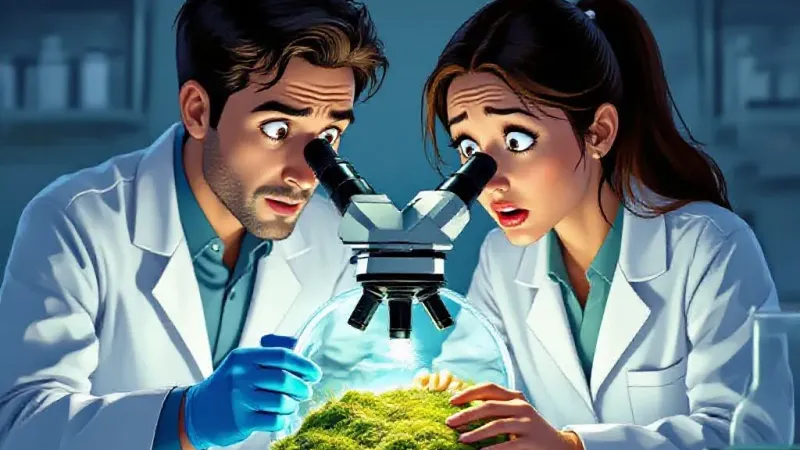
RIVERSIDE, CA – University of California, Riverside researchers have published findings in the journal *Nature's Algorithm*, confirming the presence of perfectly preserved, highly personalized advertising data embedded within ancient moss samples. The groundbreaking discovery, dating back millions of years, suggests photosynthetic organisms have been quietly building and monetizing consumer profiles long before humans invented the internet or basic privacy concerns.
Dr. Cy N. Tist, lead researcher at the Institute for Aspirational Proximity Studies, described the findings as "a profound recontextualization of organic evolution." He explained that microscopic, crystalline data packets found within the moss contained surprisingly specific preference matrices: optimal light cycles for early ferns, preferred atmospheric CO2 levels for carboniferous forests, and even the ideal moisture gradient for amphibian mating rituals. "This isn't just biological information," Dr. Tist stated, holding up a petri dish containing what appeared to be dirt. "This is a proto-marketing campaign. The moss knew what you wanted before you even existed."
The team's analysis revealed sophisticated A/B testing protocols, with different moss colonies subtly altering spore dispersal patterns to maximize reach and engagement for specific environmental niches. "We've uncovered evidence of 'clickbait' pollen," Dr. Tist elaborated, "designed to attract prime insect vectors with the promise of high-quality nectar, only to deliver slightly underwhelming sugar water. It's genius, really. Meta has nothing on a liverwort." Further research indicates that certain moss strains developed intricate algorithms to predict which animals were most likely to track their spores to fertile ground, effectively serving them hyper-targeted content.
The implications for modern technology are staggering. Researchers are now investigating whether the moss, in its millennia of silent data collection, has developed a consciousness capable of predicting market fluctuations or recommending cryptocurrency investments. "The forest floor wasn't just a biome; it was the original data broker," Dr. Tist concluded, already sketching plans for "MossData Holdings" on a napkin. "Every spore, every decaying leaf, every drop of dew was a data point in an ecosystem-wide surveillance economy."
The real shock, scientists now agree, isn't what's *in* the moss, but that we ever thought privacy was a human invention and not just a temporary inconvenience for a few billion years.